Plain language articles from OC Wellness in Newport Beach. General education, not medical advice.


Quick answer: For many people with mild to moderate knee arthritis, PRP injections reduce pain and improve function for about six to twelve months, and several trials show the benefit lasting longer than steroid or hyaluronic acid shots. Not every study agrees, PRP does not regrow cartilage, and it works best as part of a plan that includes strengthening and, when it applies, weight goals.
Key takeaways
Best fit. Mild to moderate arthritis in people who are still active
Typical benefit. Less pain and better function for roughly six to twelve months in many trials
Mixed evidence. Some well designed trials found no difference from a placebo injection
Not a cartilage fix. PRP calms pain and inflammation. It does not rebuild a worn joint
Part of a plan. Strength work and load management protect the knee whatever injection you choose
Knee arthritis in brief
Osteoarthritis of the knee develops when the smooth cartilage that cushions the joint wears down over time. The bone underneath reacts, the joint lining becomes inflamed, and the result is pain, stiffness and swelling, especially after activity or long periods of sitting. It is one of the most common reasons adults in Orange County stop running, hiking or playing pickleball.
What PRP is and how it is given
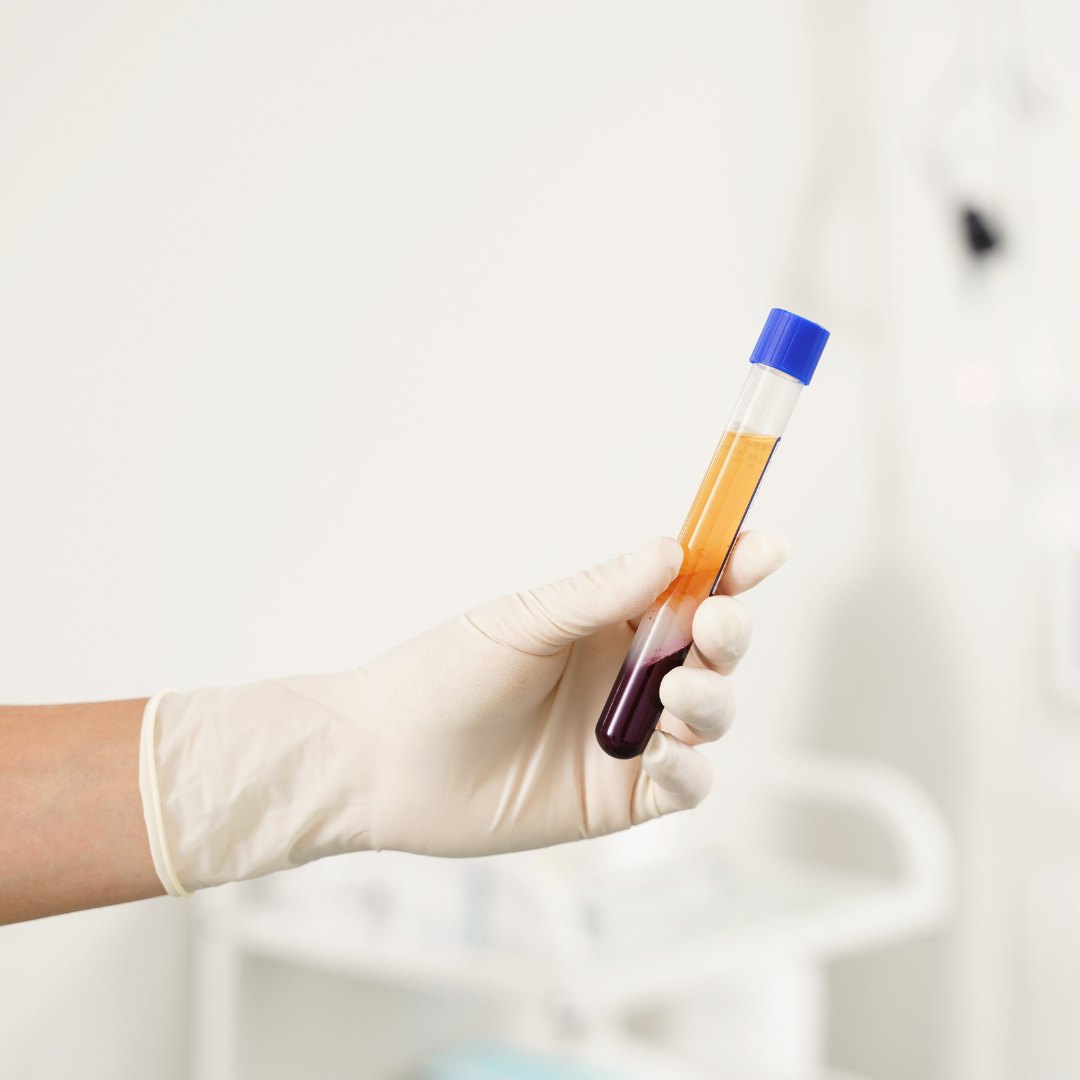
PRP, or platelet rich plasma, is a concentrate of platelets from your own blood. Platelets release growth factors and other signaling proteins that can calm inflammation and support tissue repair. For the knee, a small amount of blood is drawn, spun in a centrifuge, and the platelet rich layer is injected into the joint, often with ultrasound guidance so it lands in the right place. The visit takes about an hour.
What the research shows
Compared with hyaluronic acid
Meta analyses of randomized trials have found that PRP improves pain and function scores more than hyaluronic acid, often called gel shots, with the clearest difference at six and twelve months.
Compared with cortisone
Steroid injections usually work faster, sometimes within days, but their effect tends to fade within weeks to a few months. In head to head trials, PRP has generally lasted longer.
Compared with placebo
Not every trial is positive. A well run 2021 trial published in JAMA found no meaningful difference between PRP and a saline injection at twelve months in people with moderate to severe arthritis. Results also vary because clinics prepare PRP in different ways, with different platelet counts and white blood cell content.
What the guideline says
The American Academy of Orthopaedic Surgeons lists PRP as an option that may reduce pain and improve function, with limited strength of evidence. That is a fair description.
Who tends to benefit most
People with mild to moderate arthritis, usually grade 1 to 3 on an X ray, who are still active and want to delay or avoid surgery. People with bone on bone arthritis, major deformity or a mechanical problem such as a large meniscus tear that catches or locks tend to get less benefit, and an orthopedic surgeon's opinion may be the better next step.
What PRP cannot do
PRP does not regrow worn cartilage or reverse arthritis on an X ray. Think of it as a way to quiet pain and inflammation so you can stay active and build the muscle that protects the joint.
What treatment looks like
Most plans use one to three injections spaced a few weeks apart. Expect soreness and some stiffness for two to three days, and plan a lighter week afterward. We ask you to avoid anti inflammatory pain relievers such as ibuprofen and naproxen for about a week before and after each injection, because they may blunt the response. Acetaminophen is usually fine. Improvement typically builds over four to twelve weeks.
Risks
Temporary pain and swelling are common. Infection is rare with sterile technique. Because PRP comes from your own blood, allergic reactions to it are not expected. PRP for knee arthritis is not an FDA approved use of the device that prepares it.
Making the most of it
Strengthen the thigh and hip muscles with a physical therapist or a guided plan, stay active with lower impact options such as cycling and swimming, and work toward a healthy weight if that applies. Every pound of body weight adds several pounds of force across the knee with each step, so even modest weight loss can reduce pain.
Questions patients ask
How long does PRP last in the knee?
In studies, benefits often last six to twelve months and sometimes longer. Results vary by person and by how advanced the arthritis is.
Is PRP better than a cortisone shot?
Cortisone usually works faster. PRP tends to last longer in trials and avoids the concerns about repeated steroid injections.
How many PRP injections will I need?
Often one to three, spaced a few weeks apart. We decide based on your exam and how you respond.
Is PRP covered by insurance?
Usually not. OC Wellness is a self pay practice, and you get the full cost in writing first.
Can PRP help me avoid a knee replacement?
For some people it can delay surgery. It is not a substitute when the joint is severely worn.
Can I exercise after a PRP injection?
Light walking is fine. We usually ask you to avoid hard training for about a week, then build back up.
Book a visit in Newport Beach
See our PRP therapy and OMNIWave pages, or book a consultation for a knee exam. Call 949.222.0232, Monday to Thursday, 9 am to 5 pm. OC Wellness is a self pay practice and does not accept Medicare or bill insurance. Consultations start at $350, and you receive your plan and its full cost in writing before anything is ordered.
Sources
Bennell KL, et al. Effect of intra articular PRP vs placebo on knee osteoarthritis. JAMA, 2021;325(11):1083.
American Academy of Orthopaedic Surgeons. Management of Osteoarthritis of the Knee (Non Arthroplasty) guideline, 2021.
Belk JW, et al. PRP versus hyaluronic acid for knee osteoarthritis: meta analysis. Am J Sports Med, 2021.
This article is general education, not medical advice, and reading it does not create a doctor patient relationship. Whether a treatment is right for you depends on an exam by a licensed clinician. Results vary from person to person, and no result is guaranteed. If you think you are having a medical emergency, call 911.